SEOUL (Reuters) – South Korea believes that the North has been secretly enriching uranium at new locations outside its main nuclear site, the country's foreign minister said Friday, declining to say how many sites there were.
Earlier, a South Korean newspaper cited an unnamed intelligence official as saying that the North was enriching uranium at three or four sites in addition to its main nuclear site in Yongbyon.
"It is a report based on what is still intelligence and let me just say that we have been following this issue for some time," Foreign Minister Kim Sung-hwan told a press briefing on Tuesday when asked about it.
Kim reiterated South Korean demands that China, the reclusive North's backer, exercise greater influence on its ally "with a clearer voice."
Uranium enrichment could give the North a second source of fissile material for weapons on top of its plutonium production program at the Soviet-era nuclear program at Yongbyon, which was frozen under a now-defunct international disarmament deal.
The report of additional uranium enrichment facilities came after Russian Foreign Minister Sergei Lavrov chided North Korea over its nuclear program and condemned an artillery attack on a South Korean island that killed four people last month.
Concern over the scope of North Korea's nuclear program grew after U.S. nuclear expert Siegfried Hecker toured the Yongbyon site in November, where he saw hundreds of centrifuges and was said to have been "stunned" by the sophistication of the program.
Later that month, North Korea launched an artillery barrage against a South Korean island in what Pyongyang says are disputed waters, triggering concern about a potential conflict that could draw in the United States and China.
Although tension has subsided, Seoul has staged a series of military drills that at one stage involved a U.S. aircraft carrier.
Monday, South Korea launched a new series of live-firing drills at sea, although these are far away from the so-called Northern Limit Line, the maritime boundary between the countries.
Tuesday, December 14, 2010

Monday, December 13, 2010
US diplomat Richard Holbrooke dies
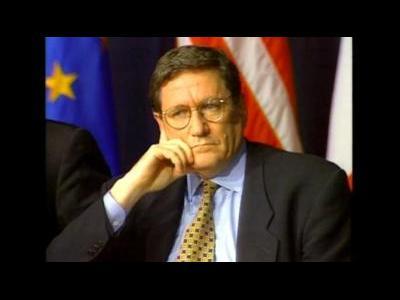
Richard Holbrooke,President Barack Obama's special envoy to Pakistan and Afghanistan
WASHINGTON – Richard Holbrooke, a brilliant and feisty U.S. diplomat who wrote part of the Pentagon Papers, was the architect of the 1995 Bosnia peace plan and served as President Barack Obama's special envoy to Pakistan and Afghanistan, died Monday, the State Department said. He was 69.
Calling Holbrooke "a true giant of American foreign policy," Obama paid homage to the veteran diplomat as "a truly unique figure who will be remembered for his tireless diplomacy, love of country, and pursuit of peace." Holbrooke deserves credit for much of the progress in Afghanistan and Pakistan, the president said.
[ For complete coverage of politics and policy, go to Yahoo! Politics ]
Holbrooke, whose forceful style earned him nicknames such as "The Bulldozer" and "Raging Bull," was admitted to the hospital on Friday after becoming ill at the State Department. The former U.S. ambassador to the U.N. had surgery Saturday to repair a tear in his aorta, the body's principal artery.
Secretary of State Hillary Clinton called Holbrooke one of America's "fiercest champions and most dedicated public servants."
"Richard Holbrooke served the country he loved for nearly half a century, representing the United States in far-flung war zones and high-level peace talks, always with distinctive brilliance and unmatched determination," Clinton said.
Holbrooke served under every Democratic president from John F. Kennedy to Obama in a lengthy career that began with a foreign service posting in Vietnam in 1962 after graduating from Brown University, and included time as a member of the U.S. delegation to the Paris Peace Talks on Vietnam.
On Capitol Hill, Senate Foreign Relations Committee Chairman John Kerry, D-Mass., called the loss of Holbrooke "almost incomprehensible," adding that his "tough-as-nails, never-quit diplomacy" saved tens of thousands of lives. Republican Rep. Ileana Ros-Lehtinen of Florida, who will chair the House Foreign Affairs Committee next year, called Holbrooke "a dynamic force in American diplomacy" whose "stellar service is deeply appreciated and held in the highest esteem."
Holbrooke's sizable ego, tenacity and willingness to push hard for diplomatic results won him both admiration and animosity.
"If Richard calls you and asks you for something, just say yes," former Secretary of State Henry Kissinger once said. "If you say no, you'll eventually get to yes, but the journey will be very painful."
He learned to become extremely informed about whatever country he was in, push for an exit strategy and look for ways to get those who live in a country to take increasing responsibility for their own security.
"He's a bulldog for the globe," Tim Wirth, president of the United Nations Foundation, once said.
The bearish Holbrooke said he has no qualms about "negotiating with people who do immoral things."
"If you can prevent the deaths of people still alive, you're not doing a disservice to those already killed by trying to do so," he said in 1999.
Born in New York City on April 24, 1941, Richard Charles Albert Holbrooke had an interest in public service from his early years. He was good friends in high school with a son of Dean Rusk and he grew close to the family of the man who would become a secretary of state for presidents Kennedy and Johnson.
Holbrooke was a young provincial representative for the U.S. Agency for International Development in South Vietnam and then an aide to two U.S. ambassadors in Saigon. At the Johnson White House, he wrote one volume of the Pentagon Papers, an internal government study of U.S. involvement in Vietnam that was completed in 1967.
The study, leaked in 1971 by a former Defense Department aide, had many damaging revelations, including a memo that stated the reason for fighting in Vietnam was based far more on preserving U.S. prestige than preventing communism or helping the Vietnamese.
After stints in and out of government — including as Peace Corps director in Morocco, editing positions at Foreign Policy and Newsweek magazines and adviser to Jimmy Carter's presidential campaign — Holbrooke became assistant secretary of state for Asian affairs from 1977-81. He then shifted back to private life — and the financial world, at Lehman Brothers.
A lifelong Democrat, he returned to public service when Bill Clinton took the White House in 1993. Holbrooke was U.S. ambassador to Germany from 1993 to 1994 and then assistant secretary of state for European affairs.
One of his signature achievements was brokering the Dayton Peace Accords that ended the war in Bosnia. He detailed the experience of negotiating the deal at an Air Force base near the Ohio city in his 1998 memoir, "To End a War."
James Dobbins, former U.S. envoy to Afghanistan who worked closely with Holbrooke early in their careers, called him a brilliant diplomat and said his success at the Dayton peace talks "was the turning point in the Clinton administration's foreign policy."
Holbrooke's efforts surrounding Dayton would later lead to controversy when wartime Bosnian Serb leader Radovan Karadzic told a war crimes tribunal in 2009 that Holbrooke had promised him immunity in return for leaving politics. Holbrooke denied the claim.
Holbrooke left the State Department in 1996 to take a Wall Street job with Credit Suisse First Boston, but was never far from the international diplomatic fray, serving as a private citizen as a special envoy to Cyprus and then the Balkans.
In 1998, he negotiated an agreement with Yugoslav President Slobodan Milosevic to withdraw Yugoslav forces from Kosovo where they were accused of conducting an ethnic cleansing campaign and allow international observers into the province.
"I make no apologies for negotiating with Milosevic and even worse people, provided one doesn't lose one's point of view," he said later.
When the deal fell apart, Holbrooke went to Belgrade to deliver the final ultimatum to Milosevic to leave Kosovo or face NATO airstrikes, which ultimately rained down on the capital.
"This isn't fun," he said of his Kosovo experience. "This isn't bridge or tennis. This is tough slogging."
Holbrooke returned to public service in 1999, when he became U.S. ambassador to the United Nations after a lengthy confirmation battle, stalled at first by ethics investigations into his business dealings and then unrelated Republican objections.
At the U.N., Holbrooke tried to broker peace in wartorn African nations. He led efforts to help refugees and fight AIDS in Africa. He also confronted U.N. anger over unpaid U.S. dues to the world body and persuaded 188 countries to overhaul the United Nations' financing and reduce U.S. payments.
"What's the point of being in the government if you don't try to make things better, which means trying to change things," Holbrooke told The Associated Press in a 2001 interview, reflecting on his time at the United Nations.
Holbrooke, with his long-standing ties to Bill Clinton and Hillary Rodham Clinton, was a strong supporter of her 2008 bid for the White House. He had been considered a favorite to become secretary of state if she had won. When she dropped out, he began reaching out to the campaign of Obama.
"Richard Holbrooke saved lives, secured peace and restored hope for countless people around the world," Bill Clinton said in a statement late Monday.
Reflecting on his role as Obama's special envoy, Holbrooke wrote in The Washington Post in March 2008 that "the conflict in Afghanistan will be far more costly and much, much longer than Americans realize. This war, already in its seventh year, will eventually become the longest in American history, surpassing even Vietnam."
Holbrooke's relationship with Afghan President Hamid Karzai was strained after their heated meeting in 2009 over the fraud-tainted Afghan presidential election. Karzai brushed it off, saying he had "no problem at all with Mr. Holbrooke." But the U.S. military commanders in Afghanistan, not Holbrooke, were the ones who ended up developed the closest relations with the mercurial Afghan leader. The State Department said Sunday that Karzai and Pakistani President Asif Ali Zardari were among those calling to wish Holbrooke well.
Holbrooke rejected direct comparisons between Afghanistan and Vietnam, but acknowledged similarities and repeatedly pressed the administration to do more to win the hearts and minds of both the Afghan and Pakistani people.
He was fully engaged in that effort until his unexpected death.
A torn aorta — the condition that cost Holbrooke's life — is a rip in the inner wall of the body's largest artery. The result is serious internal bleeding, a loss of normal blood flow and possible complications in organs affected by the resulting lack of blood, according to medical experts. Without surgery it generally leads to rapid death.
"True to form, Richard was a fighter to the end," said Clinton. "His doctors marveled at his strength and his willpower, but to his friends, that was just Richard being Richard."
Holbrooke is survived by his wife, author Kati Marton, and two sons from an earlier marriage, David Holbrooke and Anthony Holbrooke.
Official: Don King stopped in Ohio for ammo in bag
CLEVELAND – Boxing promoter Don King was stopped by security at Cleveland's Hopkins International Airport for having ammunition in his carry-on luggage.
Hopkins Airport spokeswoman Jacqueline Mayo says the 79-year-old King was stopped by members of the Transportation Safety Administration on Sunday night. She says King had ammunition for .38-caliber and .357-caliber firearms in his bag.
Mayo says the ammunition was taken and that King was released to continue his trip, she believes to Florida. She said she didn't know if King received a citation.
King didn't immediately return a telephone message seeking comment.
WOIO-TV in Cleveland first reported the incident and said King was in Cleveland for his wife's funeral.
Eighty-seven-year-old Henrietta King died Thursday in Florida from complications from stomach cancer
Hopkins Airport spokeswoman Jacqueline Mayo says the 79-year-old King was stopped by members of the Transportation Safety Administration on Sunday night. She says King had ammunition for .38-caliber and .357-caliber firearms in his bag.
Mayo says the ammunition was taken and that King was released to continue his trip, she believes to Florida. She said she didn't know if King received a citation.
King didn't immediately return a telephone message seeking comment.
WOIO-TV in Cleveland first reported the incident and said King was in Cleveland for his wife's funeral.
Eighty-seven-year-old Henrietta King died Thursday in Florida from complications from stomach cancer
Iran's president fires foreign minister
TEHRAN, Iran – Iran's president abruptly fired his foreign minister Monday and named the nuclear chief as acting top diplomat, the latest sign of a rift at the top levels of the Islamic theocracy as the country faces intense pressure from the West over its nuclear program.
President Mahmoud Ahmadinejad gave no explanation for the change in a brief statement on his website. But the fired diplomat, Manouchehr Mottaki, is seen as close to Supreme Leader Ayatollah Ali Khamenei. And the president may be aiming to install a figure more personally loyal to himself as Tehran resumes critical talks with world powers over the nuclear program that has brought four rounds of U.N. sanctions on Iran.
The nuclear chief, Ali Akbar Salehi, is one of Ahmadinejad's 12 vice presidents.
"This move shows not only the internal tensions but the primacy of the nuclear issue as Iran's main foreign policy objective," said Rasool Nafisi, an expert on Iranian affairs at Strayer University in Virginia.
Just a week before the shake-up, Iran resumed negotiations with six world powers over its suspect nuclear program after a long hiatus and another round is planned for early next year. Four sets of U.N. sanctions appear to be biting into the Iranian economy and Ahmadinejad may be looking for a loyal foreign minister who will help him clinch a deal with the six powers to ease the punitive measures.
A fourth round of sanctions was imposed in June over Iran's refusal to halt uranium enrichment, a key part of its nuclear program that is of international concern because it can be used both for making reactor fuel and atomic weapons. Iran insists its aims are entirely peaceful, but the U.N.'s International Atomic Energy Agency says its years of investigating have not been able to confirm that.
The sanctions are making it more difficult for Iran to trade with the outside world.
The president of Iran's chamber of commerce, Mohammad Nahavandian, said last month that import prices for most goods have risen by 15 to 30 percent because of sanctions. That is because companies, particularly Asian firms, are bumping up prices because they know Iran is now a desperate market and insurance is difficult — if not impossible — to obtain on shipments to Iran.
And many European firms avoid dealings with Iran or their banks refrain from transactions with Iran.
Some of the tensions between Ahmadinejad and Mottaki have spilled out into public in this closely guarded nation.
In the past year, Mottaki opposed a decision by Ahmadinejad to appoint his own special foreign envoys to key areas such as the Middle East, Afghanistan and the Caspian Sea region. Mottaki found the appointments embarrassing to the foreign ministry and allegedly took his complaint to the supreme leader. Khamenei has final say in all state matters in Iran, he runs the nuclear program and stands at the top of the clerical leadership that rules the country.
Khamenei reportedly sided with Mottaki, forcing Ahmadinejad to moderate his position and change their title only to the level of advisers.
The difference was exposed in September when Mottaki publicly attacked Mohammad Baghaei, one of the four trusted foreign policy envoys appointed by Ahmadinejad, calling him an "inexperienced" figure who was "creating problems for the country's foreign policy." Mottaki overtly said that parallel foreign policy work must be avoided, a clear reference to Ahmadinejad appointees who operated outside the foreign ministry.
Ahmadinejad has challenged the supreme leader in the past over some political appointments. Last year, the president tried to resist Khamenei's order that he fire one his vice presidents opposed by conservatives, though Ahmadinajed finally caved and removed him.
Iranian media have also reported in the past year that some lawmakers were pushing for Mottaki to be dismissed, arguing that he failed to adequately defend Iran at international organizations such as the United Nations.
It was not immediately clear how long Salehi — who holds a doctorate in nuclear physics from Massachusetts Institute of Technology in the U.S. — would remain in the caretaker role. The semiofficial Fars news agency says Mohammad Ghannadi, a prominent nuclear scientist, is expected to replace Salehi as the new nuclear chief — an indication Ahmadinejad wants him to keep the job permanently. Ghannadi is currently Salehi's deputy at the Atomic Energy Organization of Iran.
Salehi — or any other candidate — has to win a vote of confidence from the 290-seat parliament to be appointed to the job.
Prominent conservative lawmaker Alaeddin Boroujerdi says he was stunned to hear the news, saying the parliament was not aware of Ahmadinejad's decision to dismiss Mottaki, according to khabaronline.ir news website.
Mottaki was fired as he was in the middle of a tour of African nations that took him to Senegal, where he delivered a message from Ahmadinejad to the West African nation's president on Monday, according to the official IRNA news agency.
The president thanked him for his more than five years of service — spanning Ahmadinejad's entire time in office.
"It's unpleasant that he is fired in the middle of a foreign assignment. The president should have waited for Mottaki to return home first before a replacement," said conservative lawmaker Mahmoud Ahmadi Biqash.
German Foreign Minister Guido Westerwelle said Mottaki's dismissal should not affect the nuclear talks, which should continue regardless of the officials involved.
The next round of talks between Iran and the six permanent U.N. Security Council members — the U.S., Britain, France, Germany, Russia and China — and Germany is scheduled for January.
"We put emphasis that talks which just started in Geneva will continue and that different political constellations in Iran will not lead to any disruptions or delay in the talks," Westerwelle said in Brussels, where he is attending a meeting of EU foreign ministers.
Talks between Iran and the world powers broke down last year when Iran rebuffed a U.N.-drafted plan to ship abroad its stockpile of low-enriched uranium in exchange for reactor-ready fuel. Low-enriched uranium can be used in reactors, but also for warheads if brought to much higher enrichment levels.
Earlier this month, Mottaki attended a security conference in Bahrain that included U.S. Secretary of State Hillary Rodham Clinton. Mottaki, however, was on the defensive after American diplomatic memos released by WikiLeaks showed some Gulf Arab leaders urging for a U.S. military strike to cripple Iran's nuclear program.
He tried to reassure Gulf Arab nations that Iran was not a regional threat, but his statements did not resonate, said Salman Shaikh, director of The Brookings Doha Center in Qatar.
"He had a golden opportunity to change some minds about Iran, but failed," said Shaikh. "This showed that Iranian foreign policy was stumbling and perhaps this led to the change."
___
President Mahmoud Ahmadinejad gave no explanation for the change in a brief statement on his website. But the fired diplomat, Manouchehr Mottaki, is seen as close to Supreme Leader Ayatollah Ali Khamenei. And the president may be aiming to install a figure more personally loyal to himself as Tehran resumes critical talks with world powers over the nuclear program that has brought four rounds of U.N. sanctions on Iran.
The nuclear chief, Ali Akbar Salehi, is one of Ahmadinejad's 12 vice presidents.
"This move shows not only the internal tensions but the primacy of the nuclear issue as Iran's main foreign policy objective," said Rasool Nafisi, an expert on Iranian affairs at Strayer University in Virginia.
Just a week before the shake-up, Iran resumed negotiations with six world powers over its suspect nuclear program after a long hiatus and another round is planned for early next year. Four sets of U.N. sanctions appear to be biting into the Iranian economy and Ahmadinejad may be looking for a loyal foreign minister who will help him clinch a deal with the six powers to ease the punitive measures.
A fourth round of sanctions was imposed in June over Iran's refusal to halt uranium enrichment, a key part of its nuclear program that is of international concern because it can be used both for making reactor fuel and atomic weapons. Iran insists its aims are entirely peaceful, but the U.N.'s International Atomic Energy Agency says its years of investigating have not been able to confirm that.
The sanctions are making it more difficult for Iran to trade with the outside world.
The president of Iran's chamber of commerce, Mohammad Nahavandian, said last month that import prices for most goods have risen by 15 to 30 percent because of sanctions. That is because companies, particularly Asian firms, are bumping up prices because they know Iran is now a desperate market and insurance is difficult — if not impossible — to obtain on shipments to Iran.
And many European firms avoid dealings with Iran or their banks refrain from transactions with Iran.
Some of the tensions between Ahmadinejad and Mottaki have spilled out into public in this closely guarded nation.
In the past year, Mottaki opposed a decision by Ahmadinejad to appoint his own special foreign envoys to key areas such as the Middle East, Afghanistan and the Caspian Sea region. Mottaki found the appointments embarrassing to the foreign ministry and allegedly took his complaint to the supreme leader. Khamenei has final say in all state matters in Iran, he runs the nuclear program and stands at the top of the clerical leadership that rules the country.
Khamenei reportedly sided with Mottaki, forcing Ahmadinejad to moderate his position and change their title only to the level of advisers.
The difference was exposed in September when Mottaki publicly attacked Mohammad Baghaei, one of the four trusted foreign policy envoys appointed by Ahmadinejad, calling him an "inexperienced" figure who was "creating problems for the country's foreign policy." Mottaki overtly said that parallel foreign policy work must be avoided, a clear reference to Ahmadinejad appointees who operated outside the foreign ministry.
Ahmadinejad has challenged the supreme leader in the past over some political appointments. Last year, the president tried to resist Khamenei's order that he fire one his vice presidents opposed by conservatives, though Ahmadinajed finally caved and removed him.
Iranian media have also reported in the past year that some lawmakers were pushing for Mottaki to be dismissed, arguing that he failed to adequately defend Iran at international organizations such as the United Nations.
It was not immediately clear how long Salehi — who holds a doctorate in nuclear physics from Massachusetts Institute of Technology in the U.S. — would remain in the caretaker role. The semiofficial Fars news agency says Mohammad Ghannadi, a prominent nuclear scientist, is expected to replace Salehi as the new nuclear chief — an indication Ahmadinejad wants him to keep the job permanently. Ghannadi is currently Salehi's deputy at the Atomic Energy Organization of Iran.
Salehi — or any other candidate — has to win a vote of confidence from the 290-seat parliament to be appointed to the job.
Prominent conservative lawmaker Alaeddin Boroujerdi says he was stunned to hear the news, saying the parliament was not aware of Ahmadinejad's decision to dismiss Mottaki, according to khabaronline.ir news website.
Mottaki was fired as he was in the middle of a tour of African nations that took him to Senegal, where he delivered a message from Ahmadinejad to the West African nation's president on Monday, according to the official IRNA news agency.
The president thanked him for his more than five years of service — spanning Ahmadinejad's entire time in office.
"It's unpleasant that he is fired in the middle of a foreign assignment. The president should have waited for Mottaki to return home first before a replacement," said conservative lawmaker Mahmoud Ahmadi Biqash.
German Foreign Minister Guido Westerwelle said Mottaki's dismissal should not affect the nuclear talks, which should continue regardless of the officials involved.
The next round of talks between Iran and the six permanent U.N. Security Council members — the U.S., Britain, France, Germany, Russia and China — and Germany is scheduled for January.
"We put emphasis that talks which just started in Geneva will continue and that different political constellations in Iran will not lead to any disruptions or delay in the talks," Westerwelle said in Brussels, where he is attending a meeting of EU foreign ministers.
Talks between Iran and the world powers broke down last year when Iran rebuffed a U.N.-drafted plan to ship abroad its stockpile of low-enriched uranium in exchange for reactor-ready fuel. Low-enriched uranium can be used in reactors, but also for warheads if brought to much higher enrichment levels.
Earlier this month, Mottaki attended a security conference in Bahrain that included U.S. Secretary of State Hillary Rodham Clinton. Mottaki, however, was on the defensive after American diplomatic memos released by WikiLeaks showed some Gulf Arab leaders urging for a U.S. military strike to cripple Iran's nuclear program.
He tried to reassure Gulf Arab nations that Iran was not a regional threat, but his statements did not resonate, said Salman Shaikh, director of The Brookings Doha Center in Qatar.
"He had a golden opportunity to change some minds about Iran, but failed," said Shaikh. "This showed that Iranian foreign policy was stumbling and perhaps this led to the change."
___
India protests U.S. frisking of top diplomats
NEW DELHI (Reuters) – India's foreign ministry has protested to Washington after reports two of New Delhi's diplomats were frisked at U.S. airports, describing the searches as serious breaches of protocol. Hardeep Puri, India's ambassador to the United Nations, was subjected to a pat-down search and held for 30 minutes at Houston airport a fortnight ago after refusing on religious grounds requests by officials to remove his turban, the Press Trust of India news agency reported on Monday.
On December 4, Indian ambassador to the United States Meera Shankar was selected by security officials at a Mississippi airport for a pat-down search, despite reportedly notifying officials of her diplomatic status.
"We have taken it up with the U.S. authorities and the matter is at that stage," External Affairs Minister S.M. Krishna said on Monday, referring to Puri, a Sikh.
Sikh men keep their hair covered at all times with a turban, which is not allowed to be touched in public.
The searches sparked off outrage in India, with several political parties demanding U.S. officials too be frisked at Indian airports. India exempts holders of diplomatic passports from airport searches. "Let me be frank. This is unacceptable to India. We are going to take it up with the government of the United States so that such unpleasant incidents do not recur," Krishna told reporters on Thursday in response to the Shankar incident.
There have been past instances of Indian officials at U.S. airports being searched, but beyond New Delhi issuing protests, they have not caused any major diplomatic row.
Last year, Continental Airlines frisked former Indian President Abdul Kalam. Then-Indian defense minister George Fernandes was strip-searched twice at a Washington airport in 2002 and 2003. The U.S. Homeland Security Department had initially described Shankar's pat-down as "appropriate under the circumstances" before Secretary of State Hilary Clinton on Thursday said she was "concerned" and an official apology was issued.
"Secretary of State Hilary Clinton has indicated that they have to revisit some of their procedures particularly with reference to the diplomatic corps of other countries," Krishna told NDTV on Monday.
On December 4, Indian ambassador to the United States Meera Shankar was selected by security officials at a Mississippi airport for a pat-down search, despite reportedly notifying officials of her diplomatic status.
"We have taken it up with the U.S. authorities and the matter is at that stage," External Affairs Minister S.M. Krishna said on Monday, referring to Puri, a Sikh.
Sikh men keep their hair covered at all times with a turban, which is not allowed to be touched in public.
The searches sparked off outrage in India, with several political parties demanding U.S. officials too be frisked at Indian airports. India exempts holders of diplomatic passports from airport searches. "Let me be frank. This is unacceptable to India. We are going to take it up with the government of the United States so that such unpleasant incidents do not recur," Krishna told reporters on Thursday in response to the Shankar incident.
There have been past instances of Indian officials at U.S. airports being searched, but beyond New Delhi issuing protests, they have not caused any major diplomatic row.
Last year, Continental Airlines frisked former Indian President Abdul Kalam. Then-Indian defense minister George Fernandes was strip-searched twice at a Washington airport in 2002 and 2003. The U.S. Homeland Security Department had initially described Shankar's pat-down as "appropriate under the circumstances" before Secretary of State Hilary Clinton on Thursday said she was "concerned" and an official apology was issued.
"Secretary of State Hilary Clinton has indicated that they have to revisit some of their procedures particularly with reference to the diplomatic corps of other countries," Krishna told NDTV on Monday.
Tuesday, December 7, 2010
Wikileaks founder Julian Assange arrested in London
The founder of the whistle-blowing website Wikileaks, Julian Assange, has been arrested by police in London.
The 39-year-old Australian, who was the subject of a European arrest warrant, denies allegations he sexually assaulted two women in Sweden.
Mr Assange is due to appear at City of Westminster Magistrates' Court later.
A Wikileaks spokesman said Mr Assange's arrest was an attack on media freedom but it would not stop the release of more secret files.
Kristinn Hrafnsson told Reuters on Tuesday: "Wikileaks is operational. We are continuing on the same track as laid out before.
"Any development with regards to Julian Assange will not change the plans we have with regards to the releases today and in the coming days."
Secret locations
He said Wikileaks was being operated by a group in London and other secret locations.
Scotland Yard said Mr Assange was arrested by appointment at a London police station at 0930 GMT.
Mr Assange is accused by the Swedish authorities of one count of rape, one of unlawful coercion and two counts of sexual molestation, alleged to have been committed in August 2010.
If the district judge rules the arrest warrant is legally correct, he could be extradited to Sweden.
But the process could take months.
Police contacted his lawyer, Mark Stephens, on Monday night after receiving a European arrest warrant from the Swedish authorities.
An earlier warrant, issued last month, had not been filled in correctly.
Mr Stephens said his client was keen to learn more about the allegations and anxious to clear his name.
He said: "It's about time we got to the end of the day and we got some truth, justice and rule of law.
"Julian Assange has been the one in hot pursuit to vindicate himself to clear his good name."
Mr Stephens said Mr Assange had been trying to meet the Swedish prosecutor to find out the details about the allegations he faces.
Mr Assange has come in for criticism in the last week for the revelations made on Wikileaks.
On Monday Foreign Secretary William Hague criticised the website for publishing details of sensitive sites, including some in the UK, saying they could be targeted by terrorists.
Former US vice-presidential candidate Sarah Palin has described Mr Assange as "an anti-American operative with blood on his hands".
Wikileaks was forced to switch to a Swiss host server after several US internet service providers refused to handle it.
It has also come under cyber attack and several companies, including PayPal and Amazon, have refused to supply it.
Mr Assange is expected to appear before a district judge at City of Westminster Magistrates Court before 1230 GMT, unless special permission is given for a later hearing.
City of Westminster deals with most extradition cases but there are huge differences in the time it takes.
Extradition can be extremely swift if the accused waives his legal rights.
But some cases, such as the extradition of computer hacker Gary McKinnon to the United States, have been going on for years because of legal challenges.
A European arrest warrant is designed to speed up the process but there can be delays.
Last week a district judge finally agreed to extradite British businessman Ian Griffin to France 18 months after he was arrested for the murder of his girlfriend in a Paris hotel.
Gerard Batten, a Ukip MEP, said the Assange case highlighted the dangers of the European arrest warrant because the judge has no power to listen to the evidence to judge if there is a prime facie case.
He said: "What concerns me is that it could be used against political dissidents. I don't know of the quality of the evidence in Mr Assange's case but it does seem that he is involved in political turmoil and intrigue and there are a lot of people keen to shut him up and there is nothing a court in the UK can do to look at the evidence before they extradite him."
Mr Assange is an Australian citizen and his supporters have written an open letter to Australian Prime Minister Julia Gillard asking her to protect him.
One of the signatories, prominent barrister, Julian Burnside QC said: "First and foremost Julian Assange is an Australian citizen who is entitled to the protection of his country and does not deserve to be betrayed by his country.
"Julia Gillard has been making it virtually impossible for Assange to return to Australia where he is entitled to be. And she has even threatened to cancel his passport. That is an outrageous stance to take."
Following his arrest, Mr Assange will be brought before a court as soon as possible. That may be on Tuesday afternoon. If the court is satisfied the arrest warrant is valid, a date will be set for a full hearing, which is not likely to take place for some weeks.
Mr Assange will be able to raise his arguments against extradition at this stage.
The 'fast-track' European arrest warrant system is based on the concept that all the participating countries have legal systems which meet similar standards, and fully respect human rights. In other words, it is assumed that a person will get an equally fair trial in any of these countries.
If the accusation from the requesting state is valid, the grounds for opposing extradition are very limited.
The 39-year-old Australian, who was the subject of a European arrest warrant, denies allegations he sexually assaulted two women in Sweden.
Mr Assange is due to appear at City of Westminster Magistrates' Court later.
A Wikileaks spokesman said Mr Assange's arrest was an attack on media freedom but it would not stop the release of more secret files.
Kristinn Hrafnsson told Reuters on Tuesday: "Wikileaks is operational. We are continuing on the same track as laid out before.
"Any development with regards to Julian Assange will not change the plans we have with regards to the releases today and in the coming days."
Secret locations
He said Wikileaks was being operated by a group in London and other secret locations.
Scotland Yard said Mr Assange was arrested by appointment at a London police station at 0930 GMT.
Mr Assange is accused by the Swedish authorities of one count of rape, one of unlawful coercion and two counts of sexual molestation, alleged to have been committed in August 2010.
If the district judge rules the arrest warrant is legally correct, he could be extradited to Sweden.
But the process could take months.
Police contacted his lawyer, Mark Stephens, on Monday night after receiving a European arrest warrant from the Swedish authorities.
An earlier warrant, issued last month, had not been filled in correctly.
Mr Stephens said his client was keen to learn more about the allegations and anxious to clear his name.
He said: "It's about time we got to the end of the day and we got some truth, justice and rule of law.
"Julian Assange has been the one in hot pursuit to vindicate himself to clear his good name."
Mr Stephens said Mr Assange had been trying to meet the Swedish prosecutor to find out the details about the allegations he faces.
Mr Assange has come in for criticism in the last week for the revelations made on Wikileaks.
On Monday Foreign Secretary William Hague criticised the website for publishing details of sensitive sites, including some in the UK, saying they could be targeted by terrorists.
Former US vice-presidential candidate Sarah Palin has described Mr Assange as "an anti-American operative with blood on his hands".
Wikileaks was forced to switch to a Swiss host server after several US internet service providers refused to handle it.
It has also come under cyber attack and several companies, including PayPal and Amazon, have refused to supply it.
Mr Assange is expected to appear before a district judge at City of Westminster Magistrates Court before 1230 GMT, unless special permission is given for a later hearing.
City of Westminster deals with most extradition cases but there are huge differences in the time it takes.
Extradition can be extremely swift if the accused waives his legal rights.
But some cases, such as the extradition of computer hacker Gary McKinnon to the United States, have been going on for years because of legal challenges.
A European arrest warrant is designed to speed up the process but there can be delays.
Last week a district judge finally agreed to extradite British businessman Ian Griffin to France 18 months after he was arrested for the murder of his girlfriend in a Paris hotel.
Gerard Batten, a Ukip MEP, said the Assange case highlighted the dangers of the European arrest warrant because the judge has no power to listen to the evidence to judge if there is a prime facie case.
He said: "What concerns me is that it could be used against political dissidents. I don't know of the quality of the evidence in Mr Assange's case but it does seem that he is involved in political turmoil and intrigue and there are a lot of people keen to shut him up and there is nothing a court in the UK can do to look at the evidence before they extradite him."
Mr Assange is an Australian citizen and his supporters have written an open letter to Australian Prime Minister Julia Gillard asking her to protect him.
One of the signatories, prominent barrister, Julian Burnside QC said: "First and foremost Julian Assange is an Australian citizen who is entitled to the protection of his country and does not deserve to be betrayed by his country.
"Julia Gillard has been making it virtually impossible for Assange to return to Australia where he is entitled to be. And she has even threatened to cancel his passport. That is an outrageous stance to take."
Following his arrest, Mr Assange will be brought before a court as soon as possible. That may be on Tuesday afternoon. If the court is satisfied the arrest warrant is valid, a date will be set for a full hearing, which is not likely to take place for some weeks.
Mr Assange will be able to raise his arguments against extradition at this stage.
The 'fast-track' European arrest warrant system is based on the concept that all the participating countries have legal systems which meet similar standards, and fully respect human rights. In other words, it is assumed that a person will get an equally fair trial in any of these countries.
If the accusation from the requesting state is valid, the grounds for opposing extradition are very limited.
Assange may surrender to British police

LONDON – Julian Assange's lawyer was arranging to deliver the WikiLeaks founder to British police for questioning in a sex-crimes investigation of the man who has angered Washington by spilling thousands of government secrets on the Internet.
Lawyer Mark Stephens told reporters in London that the Metropolitan Police had called him to say they had received an arrest warrant from Sweden for Assange. Assange has been staying at an undisclosed location in Britain.
"We are in the process of making arrangements to meet with police by consent," Stephens said Monday, declining to say when Assange's interview with police would take place.
Scotland Yard refused to comment.
The 39-year-old Australian is wanted on suspicion of rape, sexual molestation and unlawful coercion in Sweden, and the case could lead to his extradition. Interpol placed Assange on its most-wanted list on Nov. 30 after Sweden issued an arrest warrant. Last week, Sweden's highest court upheld the detention order.
Assange has denied the accusations, which Stephens has said stem from a "dispute over consensual but unprotected sex." The lawyer has said the Swedish investigation has turned into a "political stunt."
Another Assange lawyer, Jennifer Robinson, said the WikiLeaks founder had voluntarily offered to cooperate with Swedish prosecutors because he "is very keen to clear his name," but his offers have been refused. She said it was "disproportionate" to seek an arrest warrant rather than a formal summons for his interrogation.
"Mr. Assange still has not seen the full allegations against him or the potential charges he faces in a language which he understands, which is English, and this in clear breach of his human rights under the European Convention of Human Rights," Robinson said in an interview with the Australian Broadcasting Corp.
The pressure on WikiLeaks mounted from other quarters Monday: Swiss authorities closed Assange's bank account, depriving him of a key fundraising tool. And WikiLeaks struggled to stay online despite more hacker attacks and resistance from world governments, receiving help from computer-savvy advocates who have set up hundreds of "mirrors" — or carbon-copy websites — around the world.
In one of its most sensitive disclosures yet, WikiLeaks released on Sunday a secret 2009 diplomatic cable listing sites around the world that the U.S. considers critical to its security. The locations include undersea communications lines, mines, food suppliers, manufacturers of weapons components, and vaccine factories.
Pentagon spokesman Col. David Lapan called WikiLeaks' disclosure "dangerous" and said it gives valuable information to the nation's enemies.
Australian Prime Minister Julia Gillard told a news conference Tuesday that it is "grossly irresponsible" for WikiLeaks to publish items like critical infrastructure lists.
But she backed away from her comment made last week that posting classified U.S. government documents on the WikiLeaks website was an "illegal" act.
After being pressed by reporters to distinguish between leaking the documents and posting them, Gillard said their publication would not have been possible "if there had not been an illegal act undertaken" in the United States. She said police were still investigating whether Assange has broken any Australian laws.
WikiLeaks has been under intense international scrutiny over its disclosure of a mountain of classified U.S. cables that have embarrassed Washington and other governments. U.S. officials have been putting pressure on WikiLeaks and those who help it, and is investigating whether Assange can be prosecuted under espionage law.
In what Assange described as a last-ditch deterrent, WikiLeaks has warned that it has distributed a heavily encrypted version of some of its most important documents and that the information could be instantly made public if the staff were arrested.
For days, WikiLeaks has been forced by governments, hackers and companies to move from one website to another. WikiLeaks is now relying on a Swedish host. But WikiLeaks' Swedish servers were crippled after coming under suspected attack again Monday, the latest in a series of such assaults.
It was not clear who was organizing the attacks. WikiLeaks has blamed previous ones on intelligence forces in the U.S. and elsewhere.
WikiLeaks' huge online following of tech-savvy young people has pitched in, setting up more than 500 mirrors.
"There is a whole new generation, digital natives, born with the Internet, that understands the freedom of communication," said Pascal Gloor, vice president of the Swiss Pirate Party, whose Swiss Web address, wikileaks.ch, has been serving as a mainstay for WikiLeaks traffic.
"It's not a left-right thing anymore. It's a generational thing between the politicians who don't understand that it's too late for them to regulate the Internet and the young who use technology every day."
Meanwhile, the Swiss postal system's financial arm, Postfinance, shut down a bank account set up by Assange to receive donations after the agency determined that he provided false information regarding his place of residence in opening the account. Assange had listed his lawyer's address in Geneva.
"He will get his money back," Postfinance spokesman Alex Josty said. "We just close the account."
Assange's lawyers said the account contained about $41,000. Over the weekend, the online payment service PayPal cut off WikiLeaks and, according to Assange's lawyers, froze $80,000 of the organization's money.
The group is left with only a few options for raising money now — through a Swiss-Icelandic credit card processing center and accounts in Iceland and Germany.
Monday marked the first day that WikiLeaks did not publish any new cables. It was unclear whether that had anything to do with the computer attacks.
Subscribe to:
Posts (Atom)